
Your needs, this model
Does it fit your priorities?
Can I require a chamber for cooled liquid pouches at least ten inches wide?
Yes. The documented chamber route supports cooled liquid food and a maximum 10-by-10-inch pouch, subject to the filled portion fitting the chamber.
Explore this need in the finder →Can I require eleven-inch pouch width and three inches of chamber height?
No. The USV1 supports a ten-inch pouch opening and has a 2.25-inch-high chamber.
Explore this need in the finder →Can I combine external suction operation with unfrozen-liquid packing?
No. The manufacturer's external textured-bag procedure excludes liquids; only the chamber arrangement establishes liquid packing.
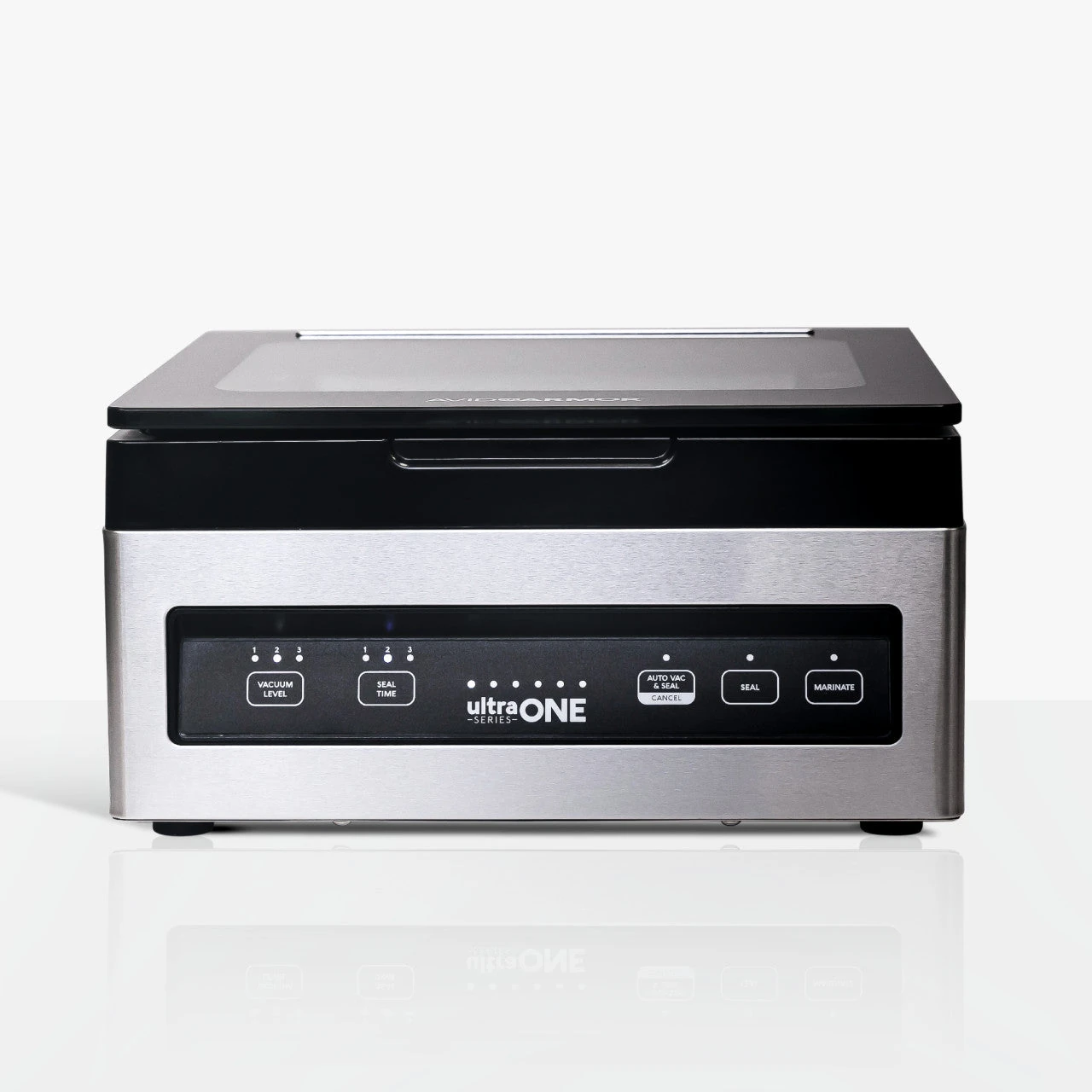
Explore this need in the finder →The Avid Armor USV1 makes sense when soup portions matter more than a large sealing chamber. Its small footprint and simple level settings suit a kitchen where the machine will come out for a few meals, then return to a cupboard. The compromise is physical: a filled pouch must fit a shallow interior, and a ten-inch bag-width limit cannot accommodate every cut of meat or family portion.
Start with the food that must fit
The current US specification lists a chamber 10.5 inches wide, 10 inches long and 2.25 inches high, with pouches up to 10 by 10 inches. That last number describes an empty pouch, not ten inches of usable food in both directions. Leave enough clean material for the seal and room for the bag to settle around its contents. A tall stack that fits the bag can still prevent the lid from closing correctly.
This is a useful format for individual portions, small batches of sauce and relatively flat sous vide preparations. It is less appealing if your normal routine involves bulky roasts or keeping several portions together. Portioning food more finely may solve the space problem, but it also means more pouches, more cycles and more packages to label. Compare your usual filled portions with the chamber before deciding the smaller machine is more convenient.
Liquid capability belongs inside the chamber
In normal chamber operation, pressure falls around the whole pouch. This allows the USV1 to package suitable cooled liquids without drawing them through an external suction channel. Keep the pouch opening clean, position it across the sealing bar and use the ledge and clamp as shown in the maker's operating instructions. Inspect the finished seal instead of relying only on the end of the automatic cycle.
The USV1 also has a documented external routine for an item too large for its chamber. That requires an embossed or textured suction bag. It changes the machine's practical role: the manufacturer expressly excludes liquids from that external method. A buyer who needs a long bag of dry portions can use that route; a buyer with a long bag of unfrozen soup cannot transfer the chamber's liquid benefit to it.
Preset levels are convenient, but delicate food still needs care
There are three vacuum levels and three sealing settings, followed by an automatic vacuum-and-seal cycle. These are a simpler choice than entering a vacuum duration for each recipe. They also offer less adjustment than a machine such as the USV20, where vacuum time can be selected directly.
Do not assume a chamber always protects fragile food from compression. Avid Armor's model-specific delicate-food guidance says the USV1 still needs a partial vacuum to make its heat seal. It recommends the largest compatible pouch, the lowest vacuum level and the Seal-only routine for that job. If preserving a particular soft texture is the priority, start with the appropriate guidance and a modest portion rather than treating maximum vacuum as the goal.
The hose is an accessory connection, not a complete jar kit
The current package includes starter chamber pouches and an accessory hose. The hose lets the pump work with compatible external equipment, but it does not supply every canister or jar attachment. Budget and store those separately if that is your intended workflow. An accessory port alone is a poor reason to choose this machine over a dedicated jar device.
For repeated upright pint or quart jars, the JARMAX has a substantially deeper chamber and specific jar-loading instructions. Vacuum sealing remains different from canning: a sealed container does not make perishable food safe for room-temperature storage.
A manageable body with a working-space allowance
The listed machine dimensions are 12 by 12 by 6.25 inches, and its weight is 13.05 pounds. It is easier to find a storage spot for that body than for the larger chambers, but leave room to raise the glass lid and handle the pouch. The closed height does not establish how much space is needed beneath a cabinet. Use a stable work surface and support the whole appliance when moving it.
The dry piston pump does not need vacuum-pump oil. The chamber, sealing area and lid gasket still need attention, and worn sealing parts remain service items. Food residue or wrinkles at the opening can undermine a package even when the pump runs normally.
Who should choose it?
Choose the USV1 for small, cooled liquid portions when storage size and uncomplicated settings are central. Choose the USVX if a deeper chamber and longer pouch would reduce repeated portioning, or the USV20 for a wider pouch and timed controls. A cook mainly making long bags from rolls should also consider the Anova Precision Pro external sealer, while respecting its different liquid-preparation rules.
Sources: USV1 specifications, operating steps, delicate-food guidance and external-bag restrictions.
Key details at a glance
| Mechanism | chamber |
|---|---|
| Power and charging | The official operating steps require plugging in the power cord. Exact US voltage and wattage are not stated in the reviewed current specifications. |
| Operating interval | Three vacuum levels and three seal settings. A continuous bag-sealing duty or exact cooling interval is not established in the model-specific sources read. |
| Supplies and accessories | Chamber pouches up to 10 by 10 inches are supported. External suction uses textured bags and excludes liquids. Starter pouches and a hose are supplied; canisters and jar fittings are separate. |
| Care and storage | The dry piston pump needs no oil. Keep the chamber, gasket and sealing surfaces clean and inspect wear parts using the supplied care instructions. |
| Chamber vacuum adjustment | levels |
| Chamber interior | molded_plastic |
| Listed interior chamber height | 2.25 in |
Use the exact model’s instructions for operating limits, supplied equipment and version differences.
Sources for this assessment
Find a process that fits your food.
Combine package type, moisture and essential conveniences, then read the operating limits.