
Your needs, this model
Does it fit your priorities?
Can the exact 65-0601-W make custom dry-food bags from an 11-inch roll?
Yes. The model-specific booklet describes a roll holder and sliding cutter for material up to 11 inches wide. Use compatible textured bags, keep a clean sealing margin, and follow the documented cooling pause.
Explore this need in the finder →Does the exact 65-0601-W have a dedicated Pulse route for a liquid bag?
Yes. Its exact booklet names the Pulse control for liquids or delicate items, followed by Manual Bag Seal. No viscosity or maximum-fill limit is printed, so this is not evidence of unlimited soup capacity.
Explore this need in the finder →Does fan cooling let the 65-0601-W run continuous bags without a pause?
No. Its exact manual requires at least 20 seconds between cycles with the lid open; the fan does not cancel that interval.
Explore this need in the finder →The Weston Pro-1100 65-0601-W is an earlier 11-inch external bag sealer that remains worth understanding if you already own one or are checking an exact used unit. Its exact booklet specifies a 680-watt, 120-volt, 60-Hz configuration with a two-piston pump, adjustable seal timing, and a built-in roll holder and cutter. It also documents a dedicated Pulse control for liquids and delicate items. The manufacturer’s captured product page now shows no stock, so this is an ownership reference rather than a default current-buy recommendation.
Do not identify it by the Pro-1100 name alone. The suffix matters: Weston’s official archive lists 65-0601-W separately, and its exact 840297401 booklet names model 65-0601-W, type VC09. The newer 65-0650-W is a related Pro-1100 with the same type of bag workflow but a printed 460-watt rating. That wattage difference is not a lab comparison and does not prove one will evacuate faster, seal better, or last longer. For a used 65-0601-W, model identity, condition, and remaining maintenance parts are more meaningful questions than the larger number on the rating panel.
What its exact manual says you can do
The 65-0601-W booklet describes automatic vacuum-to-seal, an adjustable heat-seal time, and Pulse. In automatic mode, the pump runs until its vacuum display reaches stage nine, then the selected seal time counts down; the vacuum numbers are stages, not seconds. For more control, the Pulse button lets you draw air in repeated steps while watching the bag, and Manual Bag Seal finishes the closure. Weston names liquids and delicate items as reasons to use Pulse. The instructions do not give a viscosity threshold or a maximum liquid fill, so use the documented control without assuming an unlimited thin-broth capacity.
That Pulse function is different from the 65-0501 Advantage’s Pulse-plus-Seal workflow only in the rest of the package: the Pro-1100 also has roll storage and cutting. Its manual lists an Accessory button for compatible vacuum canisters, but says the canisters are sold separately. A button and accessory port do not prove that a used machine includes a hose, container, or lid. Check what is actually present before treating that secondary routine as ready to use.
Rolls, seals, and a realistic batch
The exact manual describes a roll holder for material up to 11 inches wide and a cutter that moves across the roll. This lets you choose custom bag lengths instead of keeping several fixed-size boxes on hand. It also asks for a clean, flat bag mouth with roughly two inches of open sealing space and an uncovered vacuum port. Use compatible embossed or mesh vacuum bags; Weston warns against ordinary household bags. The guide describes an initial three-second seal setting and recommends test seals, then one-second adjustments if the material is not fully welded or melts through.
Although the booklet calls out the cooling fan, it still requires an open lid and at least 20 seconds between cycles. If the thermal protector trips, the machine may need about 20 minutes to cool. That is a real operating constraint for someone packaging many portions in a row. Work in a measured batch: prepare bags, leave the opening clean and dry, check seals as you go, and do not rush the next cycle simply because the motor has a fan.
Inspect an older unit with the manual in hand
The manual identifies replaceable chamber seals, seal-bar tape, an eight-amp fuse, and a maintenance kit. With an existing appliance, inspect those parts for damage and make sure the lid locks and releases only after the vacuum is released. The booklet says not to pull the lid open while it is still under vacuum. Cleaning is straightforward but not wash-up-in-the-sink simple: unplug, cool, then wipe the outer body, plastic chamber, and lid; never immerse or rinse it under a tap, and avoid spraying into the fan vent or peeling the seal-bar tape.
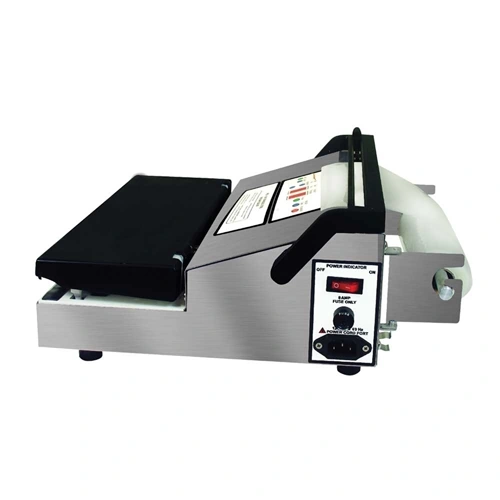
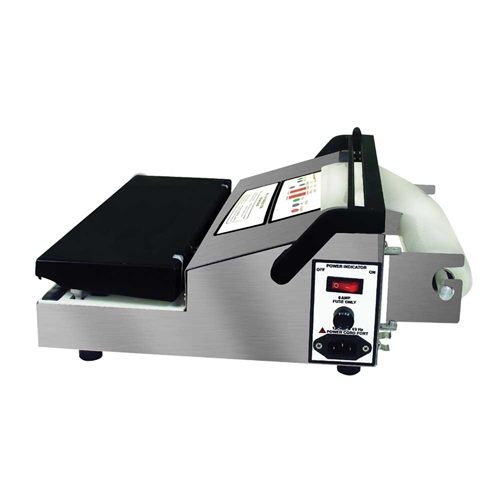
The selected Weston gallery frame for this review shows the machine itself. The page’s default image is actually a maintenance-kit graphic, so a shopper should verify that an offer is for the full 65-0601-W machine rather than a similarly named component. The official page’s live inventory record is out of stock and its custom field says RUNOUT; neither statement supplies a dependable retail-stock promise or a formal discontinuation date. Search using the full model and confirm the seller’s actual item, rather than interpreting the Pro-1100 family name as a product identity.
Who should consider it—and who should compare
This model makes the most sense as a documented reference for owners who value its Pulse, adjustable heat time, and 11-inch roll station. If you are comparing the 65-0601-W with the 65-0650-W, the older model’s exact 680-watt label is not evidence of superior sealing. Both manuals use the same 20-second interval and describe similar control steps; neither is a chamber sealer. If you do not need the roll holder or Pulse, a smaller external design may be easier to store. If a qualified thicker-liquid routine with numerical preparation limits is essential, compare the FoodSaver Elite VS5960; for frequent cool thin-liquid pouches, look at a chamber model and its exact capacity.
Vacuum packaging does not make perishable food shelf-stable; follow the manual’s refrigeration or freezing guidance. Read the exact booklet before using a 65-0601-W, especially when you cannot verify the age or contents of a used package. The Weston page for model 65-0601-W and its exact 840297401 use-and-care booklet are the model-specific references; neither should be replaced with instructions for a different Weston SKU.
Key details at a glance
| Mechanism | external |
|---|---|
| Power and charging | Exact 65-0601-W rating: 120 V, 60 Hz, 680 W, grounded household outlet. The wattage is a printed electrical input rating, not an independent suction or sealing-speed measurement. |
| Operating interval | The exact manual requires at least 20 seconds between bag cycles with the lid open; its thermal protector may need about 20 minutes after overheating. Fan cooling does not remove the stated interval. |
| Supplies and accessories | Use compatible embossed/mesh vacuum bags, not ordinary household bags. Exact instructions support roll material up to 11 inches and list a roll holder and cutter. Compatible canisters are an accessory sold separately; a complete ready-to-use canister package is not established. Starter roll contents are not claimed. |
| Care and storage | Turn off, unplug, and cool before wiping the outside, plastic vacuum chamber, and lid with a damp cloth or paper towel. Do not immerse or rinse under a tap; avoid abrasives, direct spray into the fan vent, or peeling the protective seal-bar tape. |
Use the exact model’s instructions for operating limits, supplied equipment and version differences.
Sources for this assessment
Find a process that fits your food.
Combine package type, moisture and essential conveniences, then read the operating limits.