
Your needs, this model
Does it fit your priorities?
Can I vacuum pack dry food in heat-seal bags with manual pulse control?
Yes. The exact guide describes hold-and-release Pulse, followed by Manual Seal, and a normal external vacuum-and-seal bag routine. Use compatible material and keep the mouth clean.
Explore this need in the finder →Can I require continuous back-to-back batch operation?
No. The exact US guide explicitly says it is not designed for continuous use and approves one operating cycle every two minutes, with cooling/rest instructions.
Explore this need in the finder →Can I vacuum pack cool, unfrozen liquid in an open-end bag?
No approved route is established. The manual warns about liquid entering the vacuum path and gives preparation steps for juicy food; Seal-only closure is different from vacuuming free liquid.
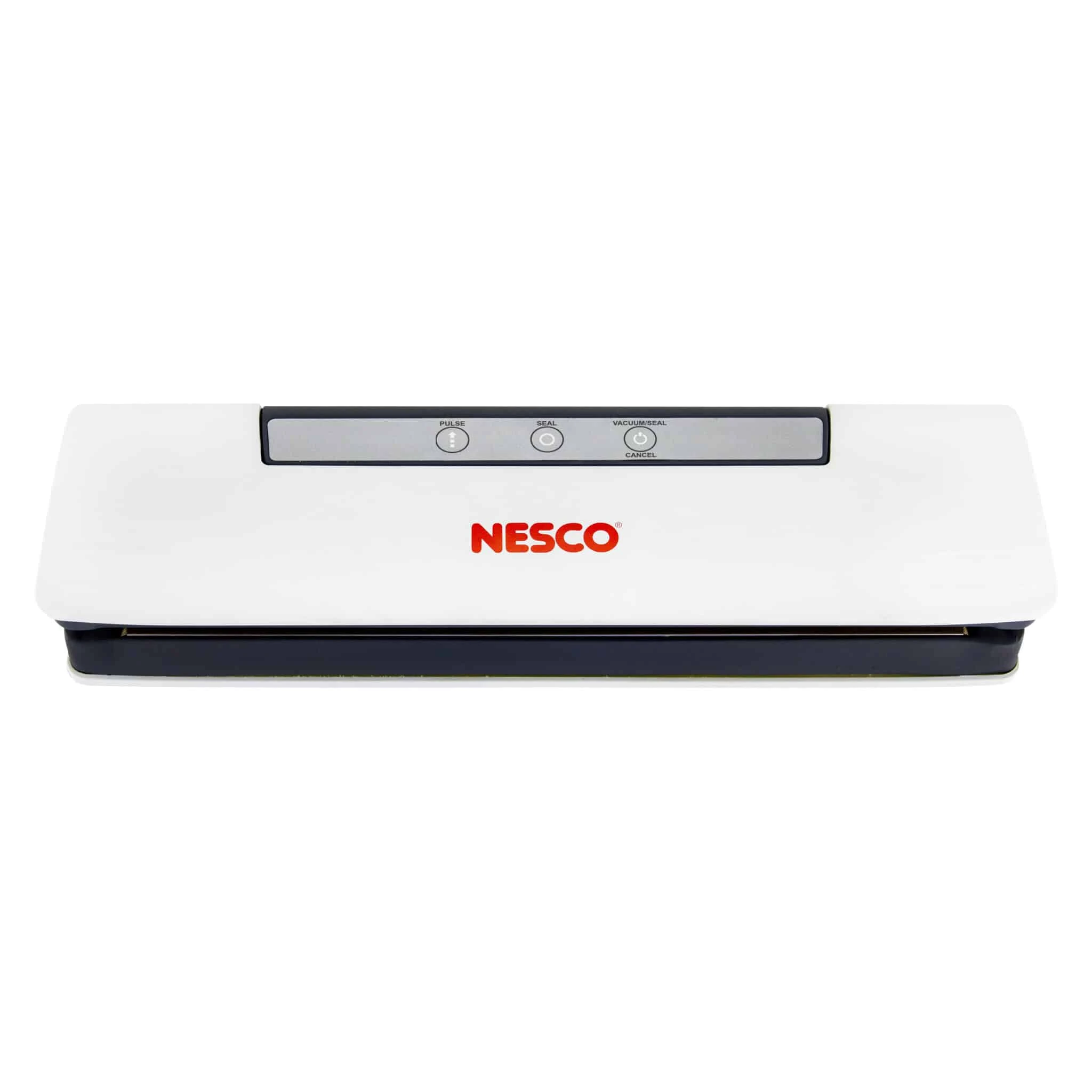
Explore this need in the finder →The NESCO VS-C1 is a straightforward external vacuum sealer for someone who will prepare a few portions deliberately, rather than run an uninterrupted production line. Its useful feature is manual pulse control: you can remove air in short bursts, watch a delicate item and then choose when to seal. The important limitation is equally concrete. Its exact US care guide approves one operating cycle every two minutes and calls for cooling between bags.
A small vacuum channel is not a food chamber
The manual calls the narrow channel under the lid a vacuum chamber. The filled bag stays outside the machine, with its open end positioned inside that channel. This is an external sealer, not a chamber machine that encloses the entire pouch and its contents. That distinction matters more than the word printed beside a part in the diagram.
The product page specifies bags up to 11.8 inches wide and supplies ten quart-size bags. You can also make bags from a compatible vacuum-sealer roll, using scissors to cut the material and the manual Seal function to close the first end. Allow space above the contents so the opening reaches the vacuum channel without folds or tension. A roll that fits another machine's width still needs to be the appropriate vacuum-sealing material; an ordinary storage bag is not an automatic substitute.
Pulse gives control, with the operator watching
Holding Pulse runs the vacuum; releasing it stops suction. Repeat as needed, then press Manual Seal. This gives you a way to stop before a fragile portion is compressed more than you want. It does not measure whether the food has reached a desirable texture, so stay beside the bag and inspect what is happening.
The automatic Vac & Seal button handles the regular evacuation-and-seal sequence. During that sequence, Manual Seal can end suction and begin sealing. Both sides of the lid need to lock, and both release buttons open it afterward. This is worth practicing with an empty piece of bag material before organizing a freezer batch: a misplaced mouth or an unlatched corner can resemble a pump problem.
Juice management is part of the job
The exact guide warns that liquids and particles can be drawn into the channel and damage the pump. For juicy foods it describes pre-freezing or positioning a folded paper towel near the top inside the bag. Keep the sealing area clean and dry. These are preparation steps for an external vacuum path, not evidence that the VS-C1 can evacuate a pouch of unfrozen soup.
A Seal-only function can close a suitable bag without drawing air out. Closing a bag containing liquid and vacuum-packing that liquid are different operations. If preserving ready-to-pour liquid portions is the central task, compare the Anova Precision Chamber Vacuum Sealer and the exact liquid procedure of the NESCO VS-22LB. Do not infer their capabilities from this model's shared brand name.
Build the rest interval into your routine
The two-minute operating restriction makes the VS-C1 a better fit for measured household work than repeated back-to-back cycles. Use the pause to label a finished portion, position the next bag and check for contamination along its mouth. Preparing a row of portions in advance is convenient, but it does not authorize ignoring the cooling instruction when the line is ready.
The machine uses an 80-watt, 120-volt, 60 Hz US supply. Wattage describes electrical input, not a guarantee of stronger vacuum than another design. There is no independently tested speed, suction ranking or endurance result behind this assessment. A buyer who values a documented continuous-batch claim should examine a machine such as the Anova Precision Vacuum Sealer Pro with its own operating instructions.
Store it with the gaskets relaxed
Unplug the sealer, wipe it with a damp sponge and dry it thoroughly. The guide says not to immerse it and to store the lid unlocked so the foam gaskets do not stay compressed. Cleaning the vacuum path after each job also makes it easier to distinguish residue from a damaged seal when a future bag fails to hold its vacuum.
Vacuum packaging does not turn perishable food into a pantry product. Continue the appropriate refrigeration or freezing routine and follow the food's handling requirements. The VS-C1 fits someone who accepts that preparation, inspection, cleaning and pacing are part of sealing. Start with dry-food heat-seal bags with manual pulse control if those are your actual needs.
Key details at a glance
| Mechanism | external |
|---|---|
| Power and charging | 80 W, 120 V AC, 60 Hz US supply. Input wattage is not an independently measured suction or speed result. |
| Operating interval | The exact guide approves one operating cycle every two minutes and instructs a two-minute rest after sealing or vacuum sealing. It is not a continuous-use machine. |
| Supplies and accessories | Includes ten quart-size bags. Compatible vacuum-sealer rolls can be cut with scissors and closed with Manual Seal; ordinary storage plastic is not automatically approved. |
| Care and storage | Unplug, wipe with a damp sponge and dry. Do not immerse. Store the lid unlocked to avoid compressing the foam gaskets. |
Use the exact model’s instructions for operating limits, supplied equipment and version differences.
Sources for this assessment
Find a process that fits your food.
Combine package type, moisture and essential conveniences, then read the operating limits.