
Your needs, this model
Does it fit your priorities?
Can I use eleven-inch textured heat-seal bags with an external sealer that has a cutter, roll storage and manual pulse?
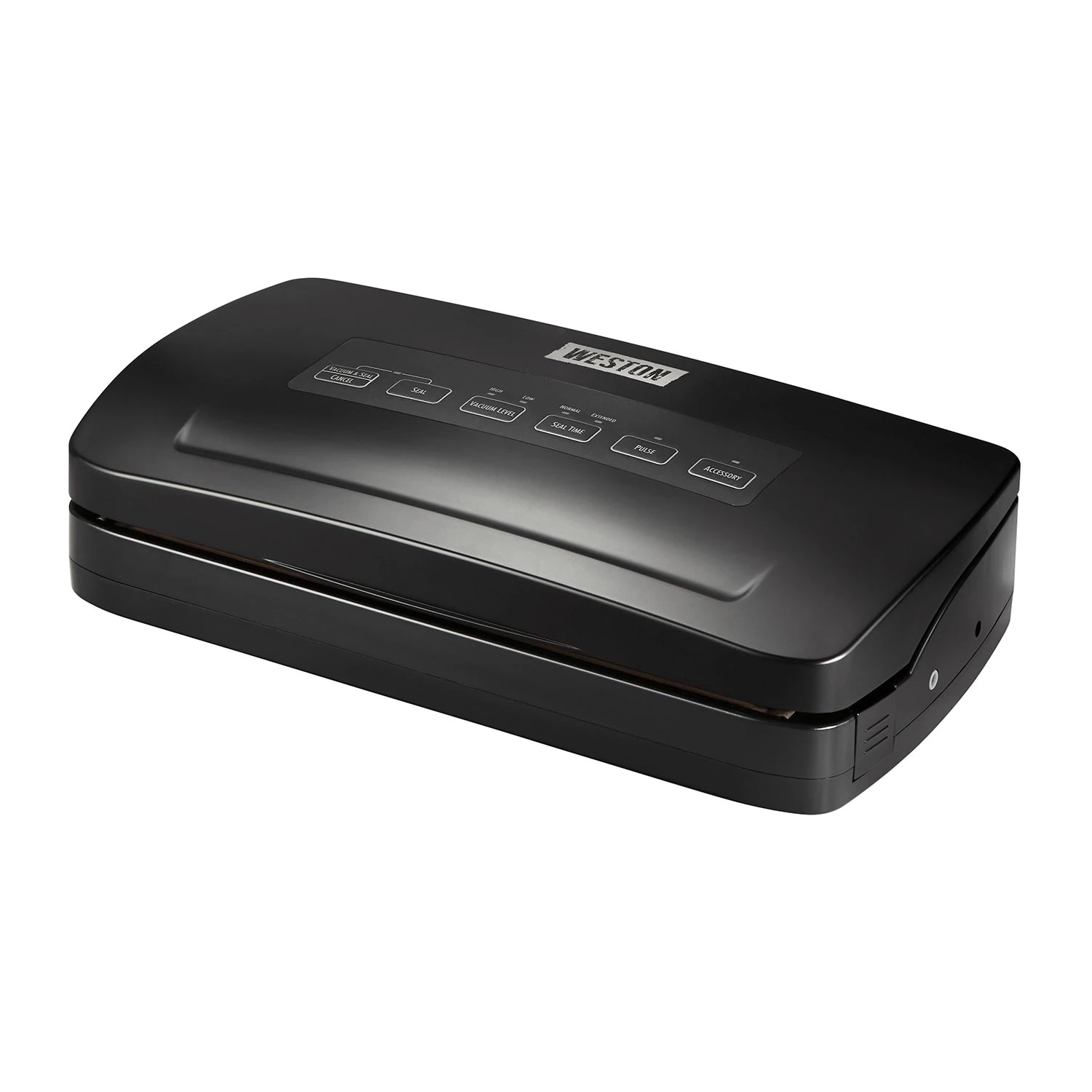
Yes. The current package includes an eleven-inch roll, and the exact model has integrated roll storage, a sliding cutter and a dedicated Pulse button.
Explore this need in the finder →Will its body satisfy a maximum width of 14.5 inches?
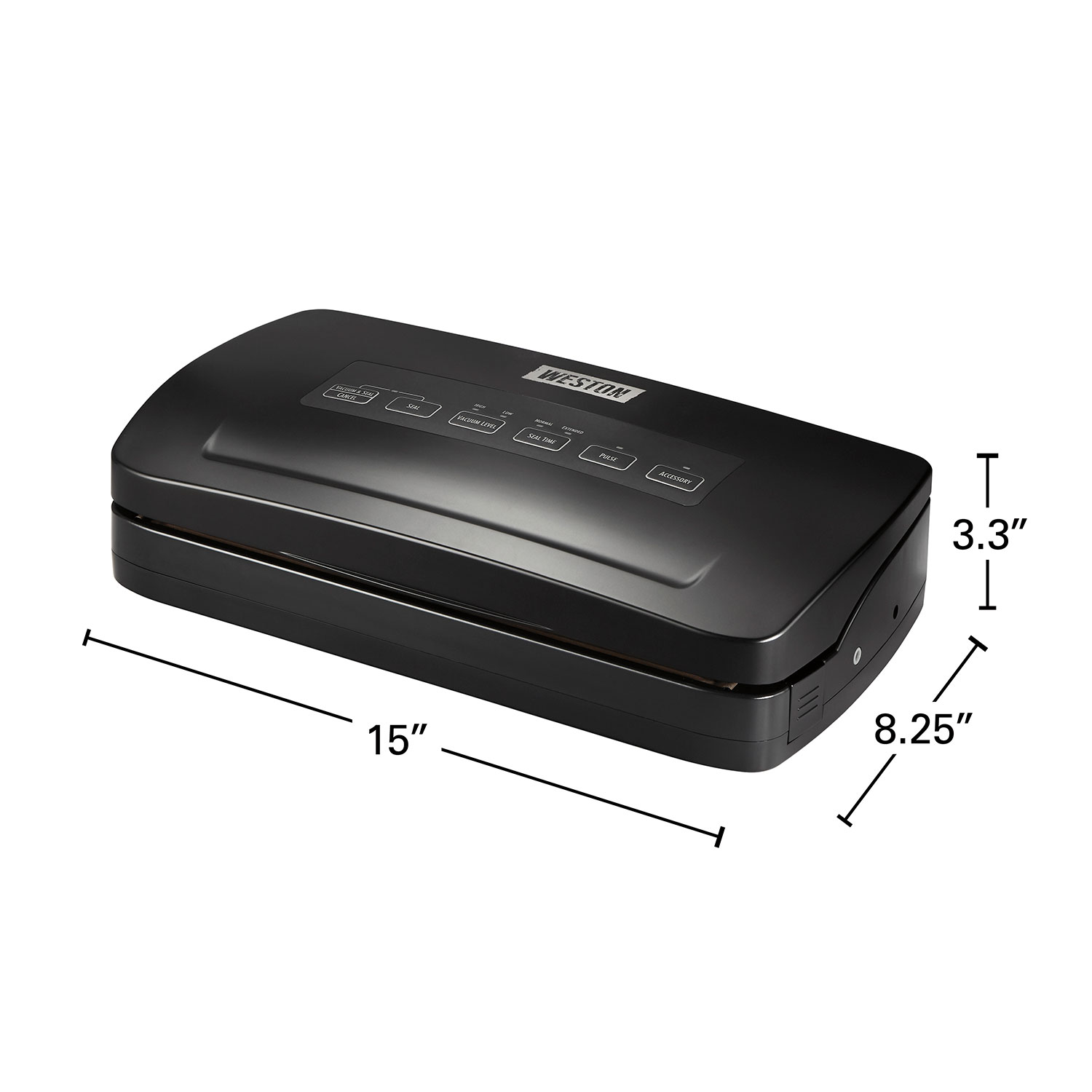
No. The current manufacturer dimension graphic and unpacked-product field agree on a fifteen-inch body width.
Explore this need in the finder →Can I vacuum-pack cool unfrozen thin broth directly in a heat-seal bag?
No. The manual instead calls for freezing soups and sauces before external bag packing and keeping liquid out of the vacuum port.
Explore this need in the finder →The Weston 65-3001-W is a practical external sealer for someone who wants roll storage, a cutter and useful control over air removal in one countertop unit. Its strongest reason to enter a shortlist is the combination of those conveniences with a real pulse button and separate vacuum-level and seal-time choices. It is a less suitable choice for packing unfrozen broth or running bag after bag without a cooling pause.
The roll compartment changes how you prepare a bag
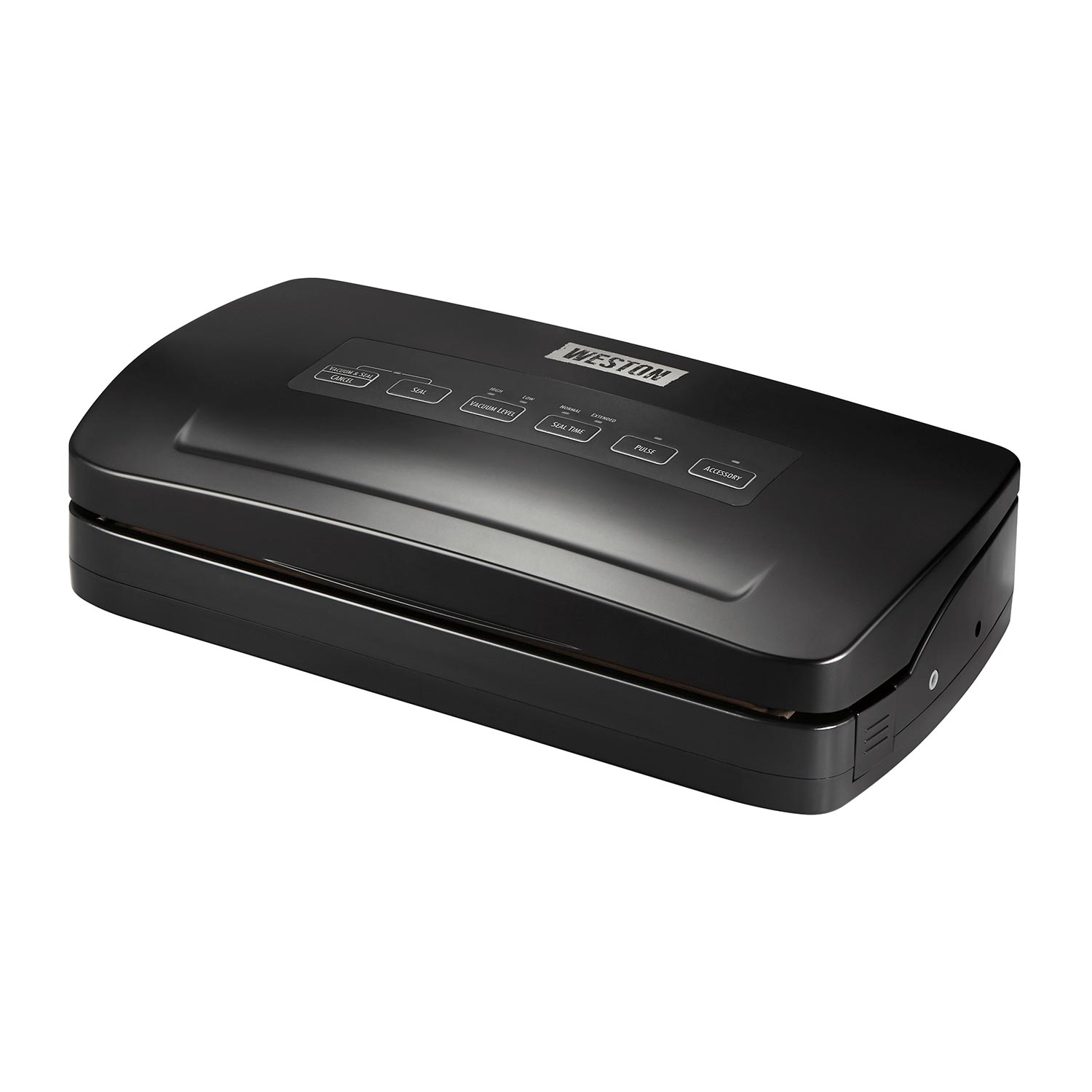
This current black model stores compatible roll material inside the machine and cuts it with a sliding cutter. That saves finding scissors and keeping a loose roll beside the appliance. It does not eliminate the first heat seal: after cutting a piece, you still seal one end before filling it and vacuum-sealing the other.
The current manufacturer package description includes an eleven-inch by twenty-foot roll, four gallon bags and six quart bags. The supplied roll establishes an eleven-inch-wide working option. Use textured external-vacuum bags, with at least one embossed side to provide an air path. A smooth chamber pouch or an ordinary household storage bag is not an equivalent replacement, even if it lies neatly across the seal strip.
The instructions tell you to allow another four inches of material beyond the item when cutting from a roll. That extra length has a purpose: the open end must reach the vacuum channel and lie flat without folds. Planning only the food’s dimensions can leave a custom bag too short to load correctly. For occasional small portions, the included precut bags avoid the extra bottom-sealing step.
Pulse, vacuum level and seal time do different jobs
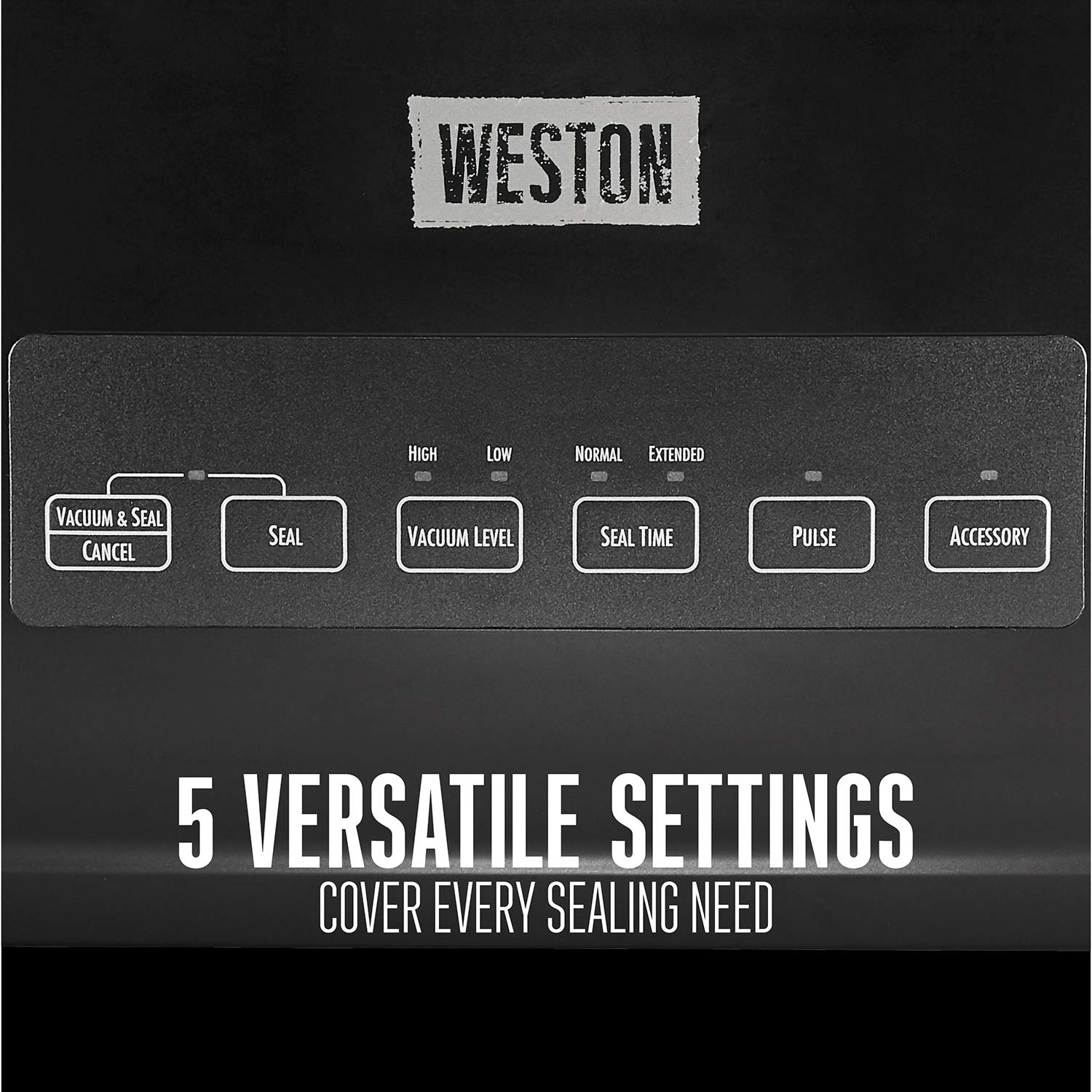
The control panel offers automatic vacuum-and-seal, a separate Seal button, High or Low vacuum, Normal or Extended seal time, Pulse, and an accessory function. Low vacuum is useful when you want less air removal for a softer item. Pulse gives a more direct intervention: hold the button to draw air, release it when the package looks right, and then press Seal.
That is a meaningful difference from the Pro-2100, whose early Manual Seal override should not be confused with a dedicated pulse routine. This smaller storage-and-cutter model may therefore suit a mixed session of crackers, portions and softer foods better than a shopper who compares only pump specifications would expect. You still need to watch the food and choose when to stop; pulse is not an automatic guarantee against crushing.
Extended changes the sealing stage for prepared moist foods. It does not turn the vacuum channel into a liquid-tolerant chamber. The manual recommends prefreezing soups, sauces and casseroles, then sealing them as frozen portions. When prefreezing moist solids is impractical, blot them and keep the bag’s sealing area dry as instructed. Liquid must not enter the vacuum port.
A cooling pause belongs in the workflow
Allow at least twenty seconds between sealing operations. That applies when making empty bags from rolls as well as when vacuum-sealing filled bags. The brief heating stage is not the full bag-to-bag production interval. If your main job is processing a large harvest or many portions in succession, compare the required pauses and bag preparation, rather than assuming the automatic button means continuous operation.
You can hold the lid down during operation or engage the side locks as instructed. The locks normally release after the operation; a beep and green light tell you when to open. Keep the bag mouth centered and flat in the vacuum chamber, and do not let its edge block the suction port. These loading details matter as much as choosing High instead of Low.
The accessory port supports compatible hoses, canisters and valve bags, but the manual identifies those accessories as separate. Do not choose this standard package expecting supplied reusable containers. Its DC jack also does not make the supplied machine cordless: the documented setup uses its power cord, and the referenced DC adapter is not supplied with this model.
Space, care and the right alternative
The current manufacturer graphic and explicit unpacked-product data agree on a fifteen-inch body width. The depth and height figures differ between those sources, so confirm the actual appliance if a tight storage opening is decisive. Leave additional room in front for the bag and above for opening the lid; a body-width measurement is not a complete operating-space requirement.
Unplug and cool the machine before wiping the exterior and vacuum channel. Do not immerse it or store it with the locks engaged, because prolonged compression can damage the seals. Check the bag mouth and seal surfaces before blaming the pump for a failed seal. The manual specifically notes folds, trapped liquid or powder, damaged bags and deformed seals as problems to inspect.
Choose the 65-3001-W for textured-bag portions, integrated roll handling and visible manual control. Compare the Pro-2500 chamber machine when cooling and packing suitable unfrozen liquids is the central task, allowing for its chamber-pouch system and its own operating limits. The earlier Realtree Edge version is documented separately: its archive status and conflicting published body dimensions make it an unsuitable substitute based solely on appearance.
Key details at a glance
| Mechanism | external |
|---|---|
| Power and charging | Current exact manufacturer record lists 110 W; documented standard operation uses the power cord. A DC jack does not establish a supplied cordless or alternative-adapter plan. |
| Operating interval | High/Low vacuum, Normal/Extended seal time and a dedicated manual Pulse routine. Wait at least twenty seconds between operations, including empty-bag seals; a short heating stage is not the complete cycle interval. |
| Supplies and accessories | Current package: eleven-inch by twenty-foot roll, four gallon bags and six quart bags. Use compatible textured external-vacuum bags. Optional hoses, canisters and valve bags are separate. |
| Care and storage | Unplug and cool before wiping the exterior and vacuum channel. Do not immerse. Store without the side locks engaged to avoid prolonged compression of the seals. |
| Confirmed closed body width | 15 in |
| Chamber vacuum adjustment | levels |
Use the exact model’s instructions for operating limits, supplied equipment and version differences.
Sources for this assessment
- Exact current public manufacturer page
- Exact public storefront SKU and original gallery record
- Published manufacturer exact-model Use & Care result, dimensions and feature fields
- Original common factory guide840301600, footer4/18,52pages
- Exact manufacturer product photograph
- Exact manufacturer dimension graphic
- Exact manufacturer control graphic
Find a process that fits your food.
Combine package type, moisture and essential conveniences, then read the operating limits.