
Your needs, this model
Does it fit your priorities?
Can I vacuum pack dry food in compatible heat-seal bags?
Yes. The exact guide documents a normal external bag cycle and separate Seal Only operation.
Explore this need in the finder →Can I require a dedicated manual Pulse control?
That control is not established. Seal Only interruption is different from a dedicated Pulse function.
Explore this need in the finder →Can I require continuous batch sealing?
No. The guide approves one operation every two minutes rather than continuous use.
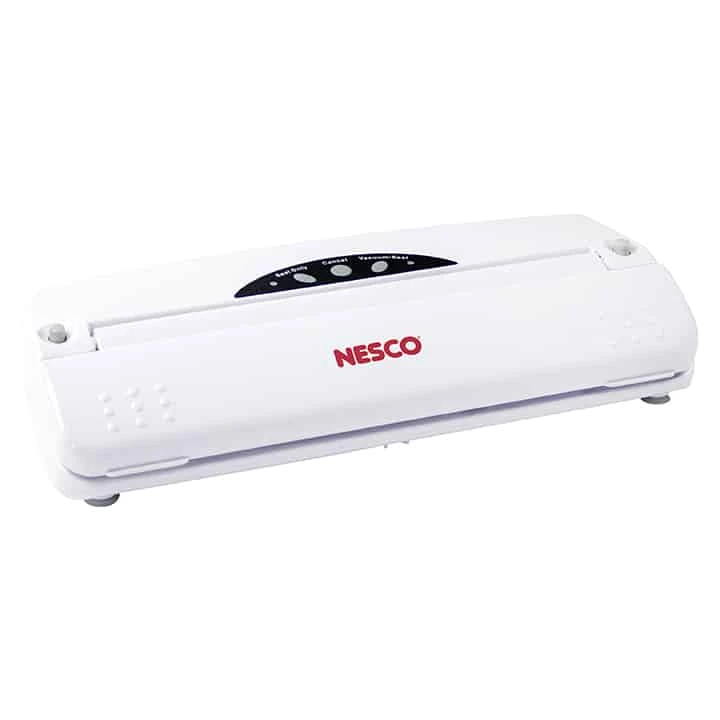
Explore this need in the finder →The NESCO VS-01 is a straightforward external bag sealer with automatic Vacuum & Seal, Seal Only and Cancel controls. It makes sense when the goal is ordinary portion packaging and extra roll-management features would go unused. Its limitations are equally important: it needs a wall connection, attention to bag preparation and a two-minute operating rhythm.
A basic panel can suit a basic routine
The exact VS-01 guide shows separate automatic vacuuming, sealing and cancellation functions. You can close one end of a custom bag with Seal Only, then fill it and run the automatic cycle. Seal Only can also interrupt vacuuming and begin closure. That provides an intervention point, although it is not the dedicated Pulse function documented on the VS-C1.
This distinction matters if your usual food is fragile. A buyer who wants repeated short bursts of suction should choose a model with affirmative pulse documentation. A buyer mostly sealing similar ordinary portions may be content to supervise an automatic cycle. Neither approach can determine the desired compression without considering the food inside the bag.
Bag preparation happens beside the machine
NESCO specifies a maximum bag width of 11.8 inches and lists premade bags in the current package. The manual's roll instructions use scissors. We do not infer an onboard cutter or storage compartment from features present on other NESCO products. Plan a place for a loose roll and cutting tool if you expect to make many custom lengths.
Premade bags can make this simple configuration easier to live with because the first end is already closed. Rolls make more sense when your portions differ substantially in length. Leave the instructed empty neck and extra material for future resealing. A bag's nominal width does not tell you whether a thick item will fit while still leaving a flat, clean mouth for the channel.
Wet contents require preparation
The guide describes freezing wet food first or using its stated paper-towel barrier approach to keep moisture from entering the channel. That is a preparation route for moist food, rather than a dedicated Moist preset. It is also different from a documented method for drawing air from an unfrozen bag of soup.
For liquid portions, compare the VS-22LB LiquidLock or Anova Precision Chamber. For a roll-storage external machine with an extended seal-time adjustment, the VS-02 is a more relevant alternative. Start with the food and the preparation you will accept, rather than assuming every vacuum sealer can handle the same contents.
A freezer session needs planned pauses
The exact guide approves one operating cycle every two minutes and says the appliance is not designed for continuous use. That is a real constraint if you intend to prepare a large pile of bags and run them one after another. Arrange filling, labeling and storage between operations, and let the appliance cool as instructed.
The 110-watt input does not establish cycle speed or air-removal performance. This review has not timed the machine, tested seal strength or measured retained vacuum. It also does not treat the product's presence in the official catalog as a stock guarantee. The VS-01 remains a useful model reference even when a particular seller cannot supply it.
Simple equipment still needs care
The cover locks on both sides and opens using two release buttons. Allow access to those buttons and support a filled bag on the counter. A crowded placement can make a small task awkward if the food pulls downward while you are trying to hold the mouth flat. The closed appliance's footprint alone is not enough to plan the work area.
Unplug before cleaning, wipe with mild soap and a damp sponge, and dry thoroughly. Leave the lid unlocked in storage to protect the gasket shape. Food residue, a crease or a puncture can cause loss of vacuum, so inspect the whole package instead of treating every problem as a motor fault.
This assessment interprets NESCO's current official VS-01 page and exact care guide. Refrigeration or freezing remains necessary for perishable food after packaging. Compare heat-bag sealers for dry portions, then add only the features your routine actually requires.
Key details at a glance
| Mechanism | external |
|---|---|
| Power and charging | 110 W,120 V,60 Hz mains-powered sealer. |
| Operating interval | Not continuous use. Approved for one operating cycle every two minutes, with two-minute cooling guidance. |
| Supplies and accessories | Current package lists ten quart and ten gallon bags. Roll material is cut with scissors and first-end sealed; onboard cutter/storage not established. |
| Care and storage | Unplug,wipe with damp sponge/mild soap,dry and store unlocked. Do not immerse; inspect sealing surfaces and bags for debris or punctures. |
Use the exact model’s instructions for operating limits, supplied equipment and version differences.
Sources for this assessment
Find a process that fits your food.
Combine package type, moisture and essential conveniences, then read the operating limits.